
vLLM Reaches 25K Total TPS/GPU on Qwen3.5
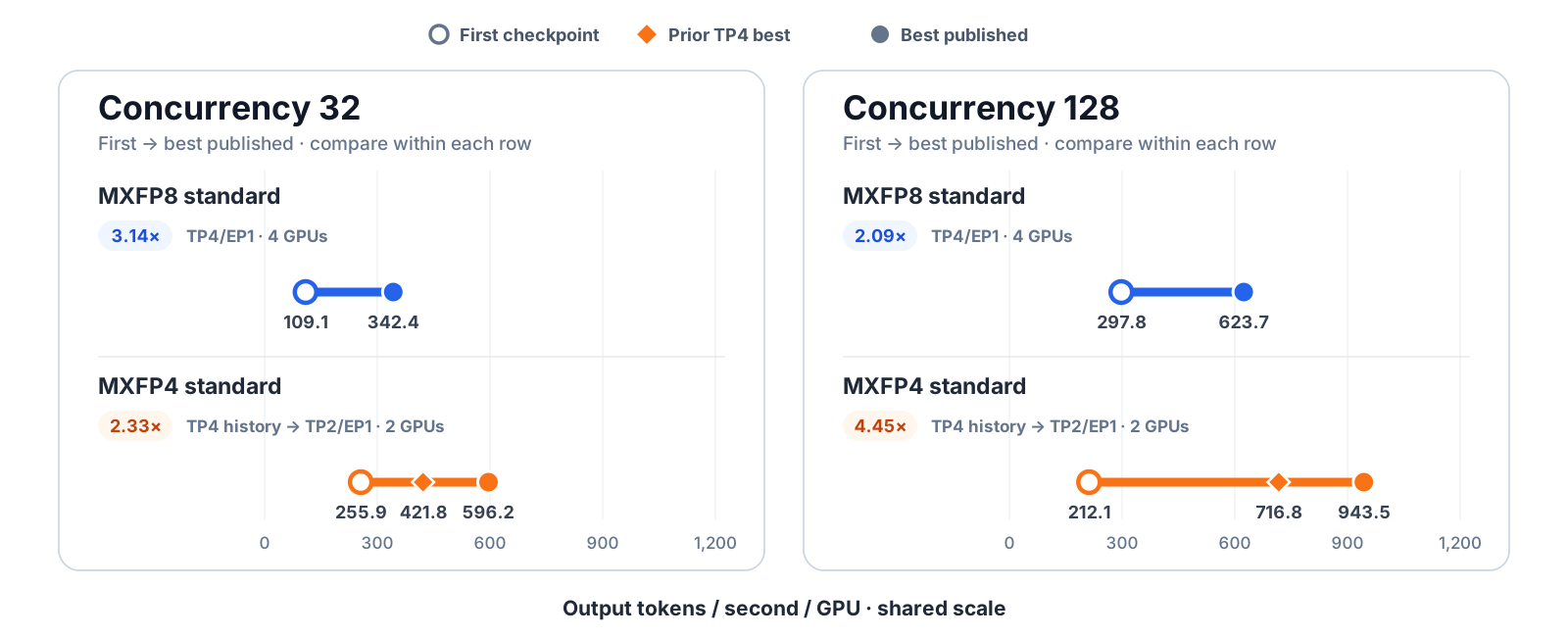
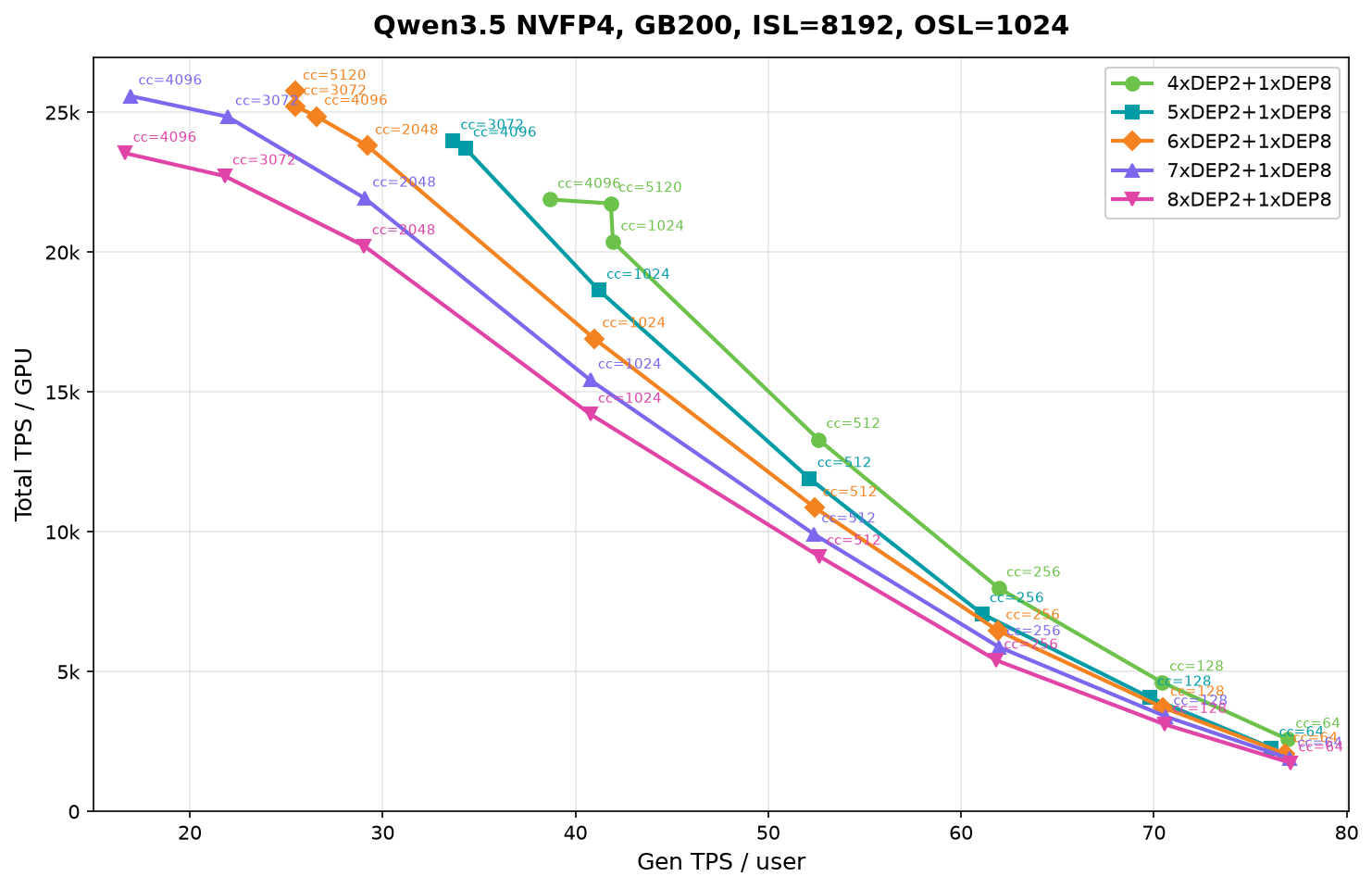
How vLLM reaches 25K total TPS/GPU on Qwen3.5-397B-A17B-NVFP4 with GB200 NVL72 disaggregated serving, Blackwell GDN kernels, HMA cache transfer, async scheduling fixes, and srt-slurm recipes.
7 posts

How vLLM reaches 25K total TPS/GPU on Qwen3.5-397B-A17B-NVFP4 with GB200 NVL72 disaggregated serving, Blackwell GDN kernels, HMA cache transfer, async scheduling fixes, and srt-slurm recipes.

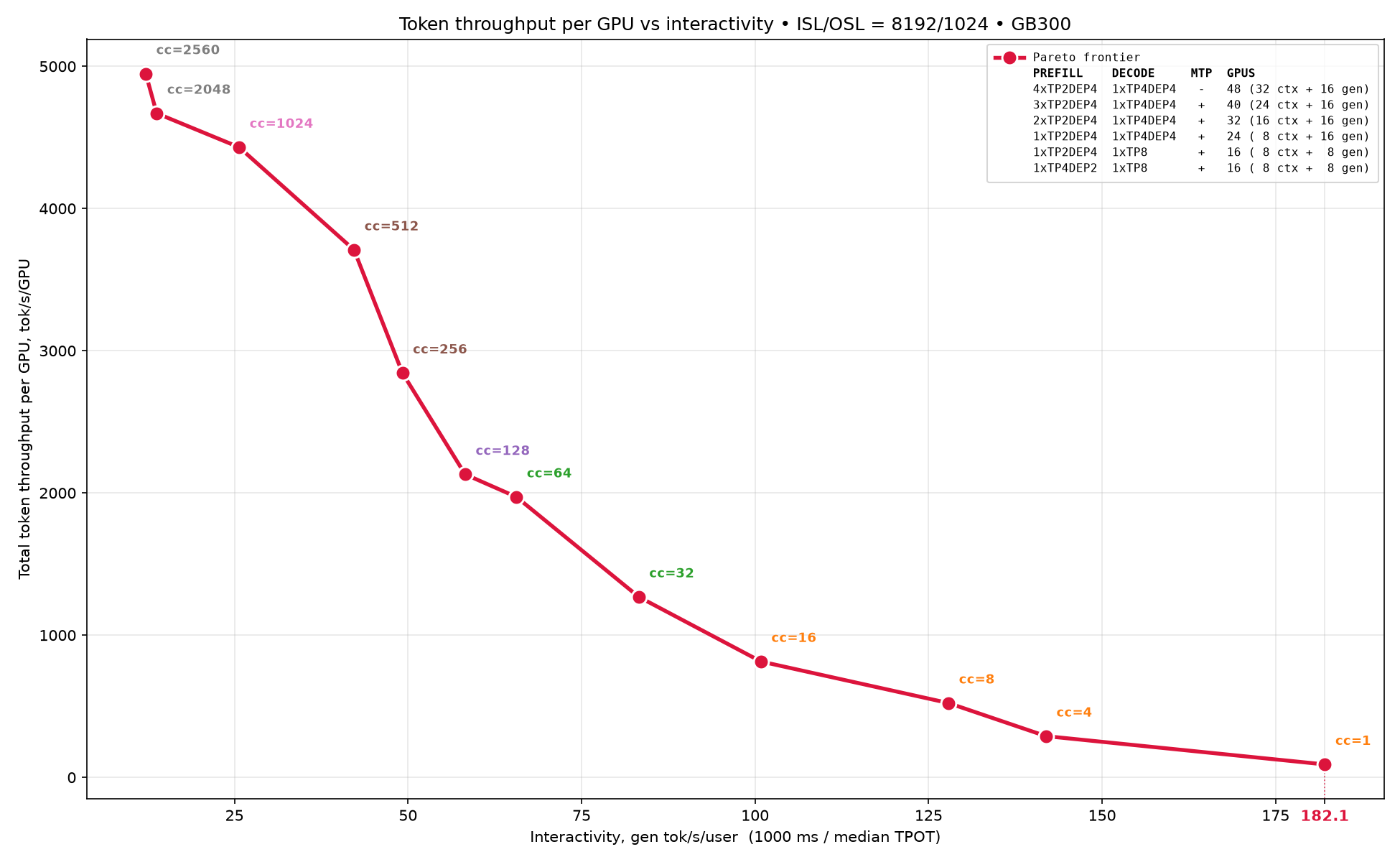
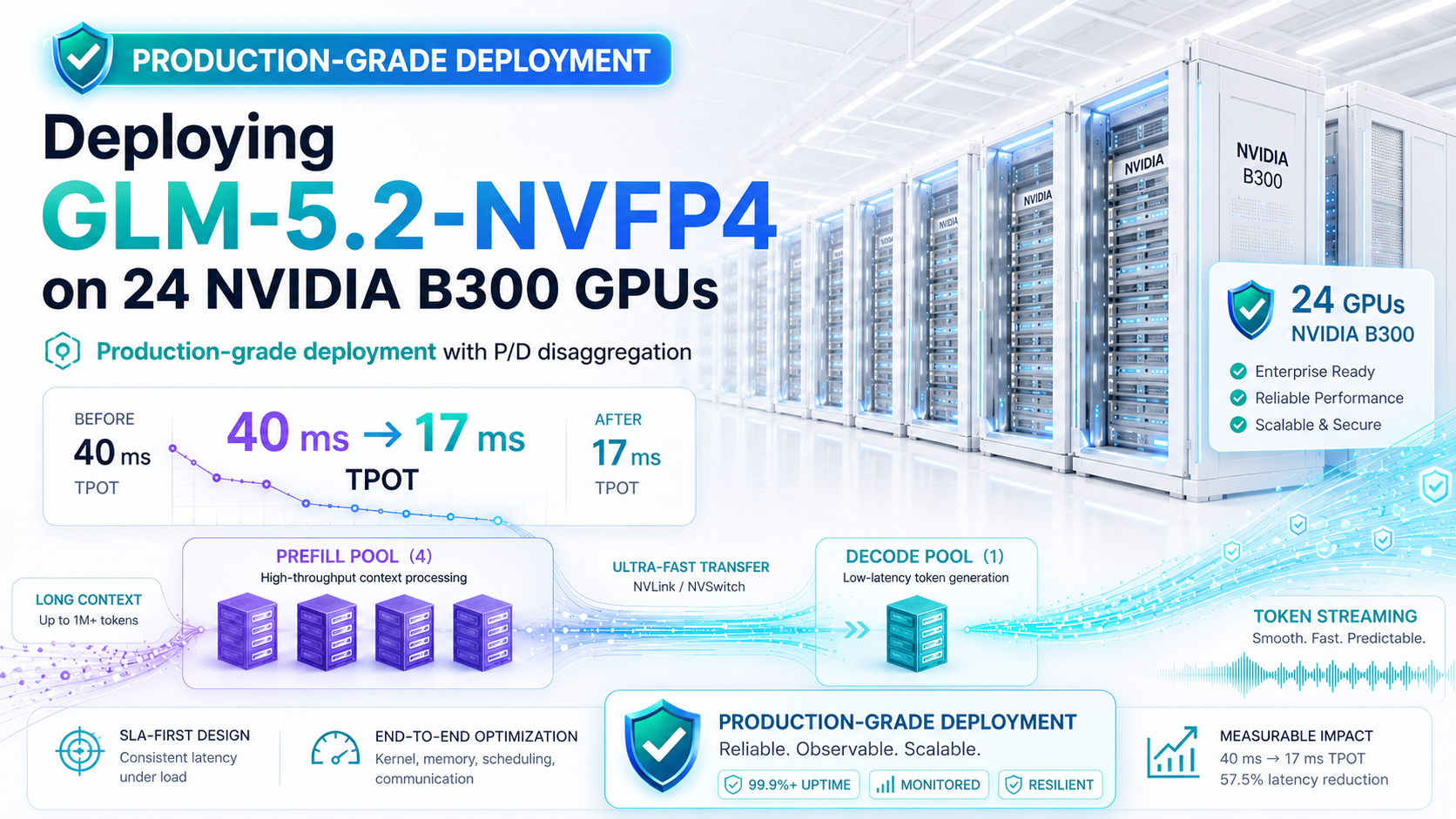
How we took GLM-5.2-NVFP4 from 40 ms to 17 ms mean TPOT on 24 B300 GPUs with vLLM: P/D disaggregation, MTP speculative decoding, Model Runner V2, and the SLA-first trade-offs behind the final configuration.

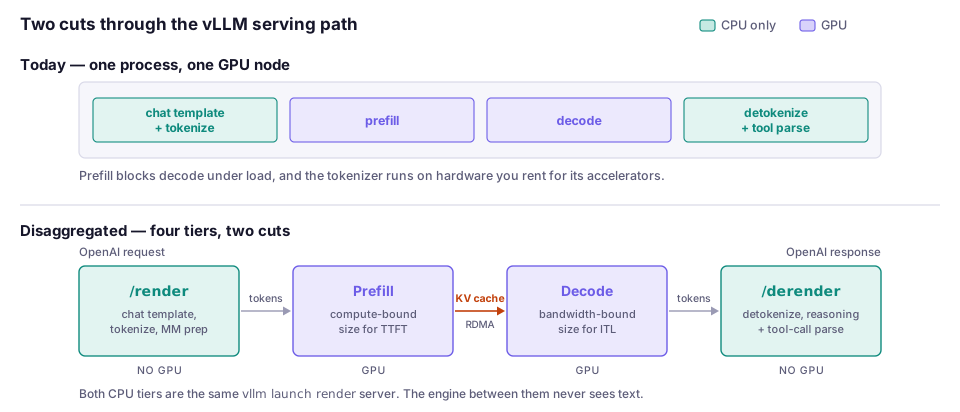
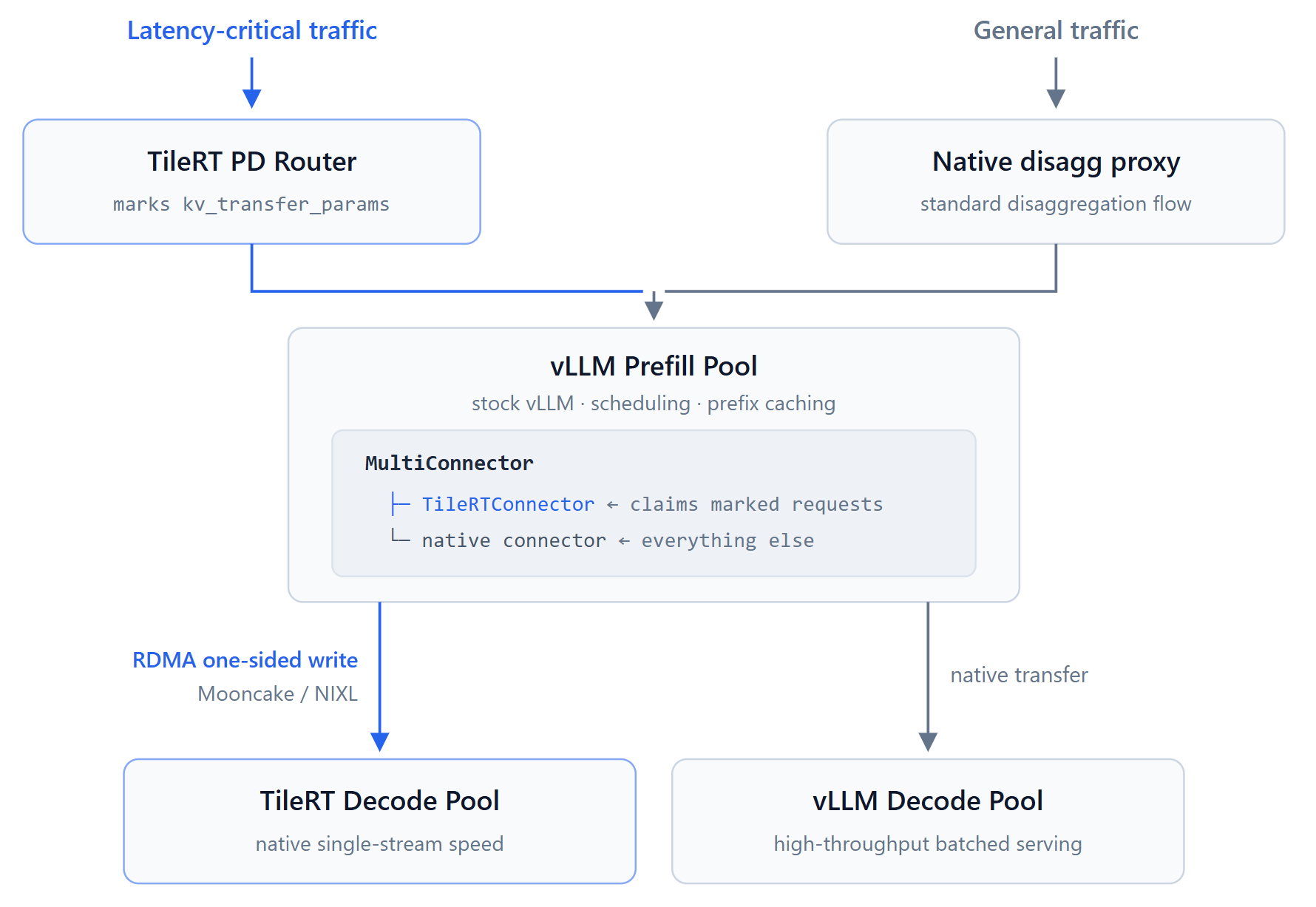
vLLM prefill paired with TileRT decode through vLLM V1's connector interface: a specialized, latency-optimized decode engine that coexists with native vLLM decode behind one shared serving layer, with zero changes to vLLM.

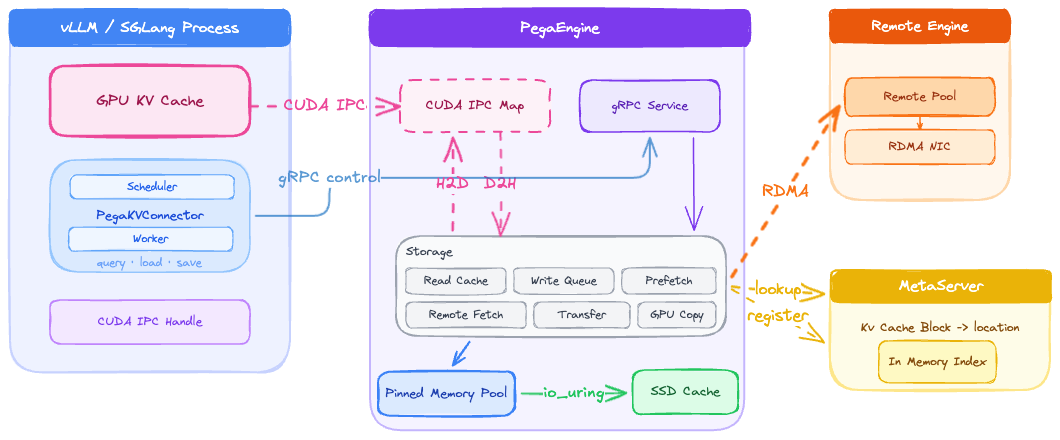
How PegaFlow integrates with vLLM as an external KV cache service, using a Rust daemon, CUDA IPC, RDMA, SSD caching, and the external KV connector to improve startup, sharing, throughput, and cache lifecycle.
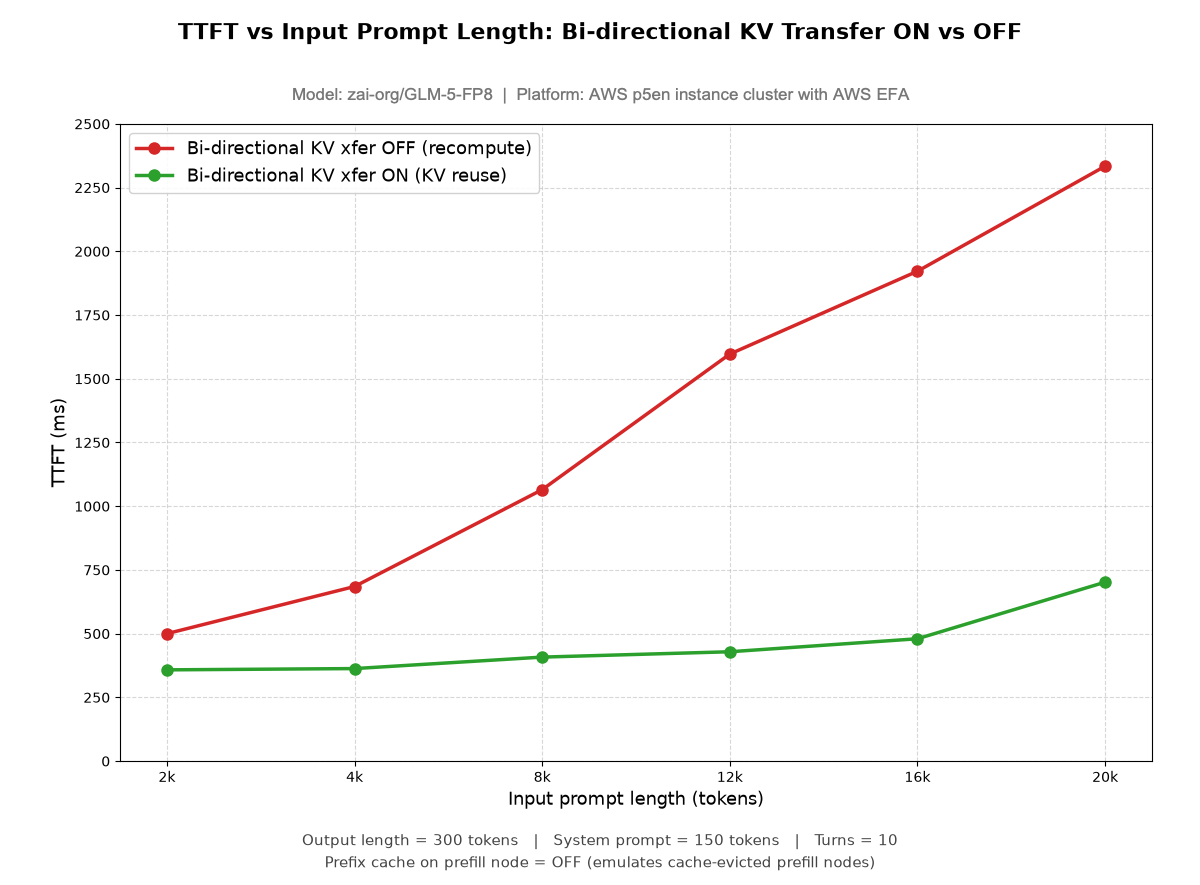
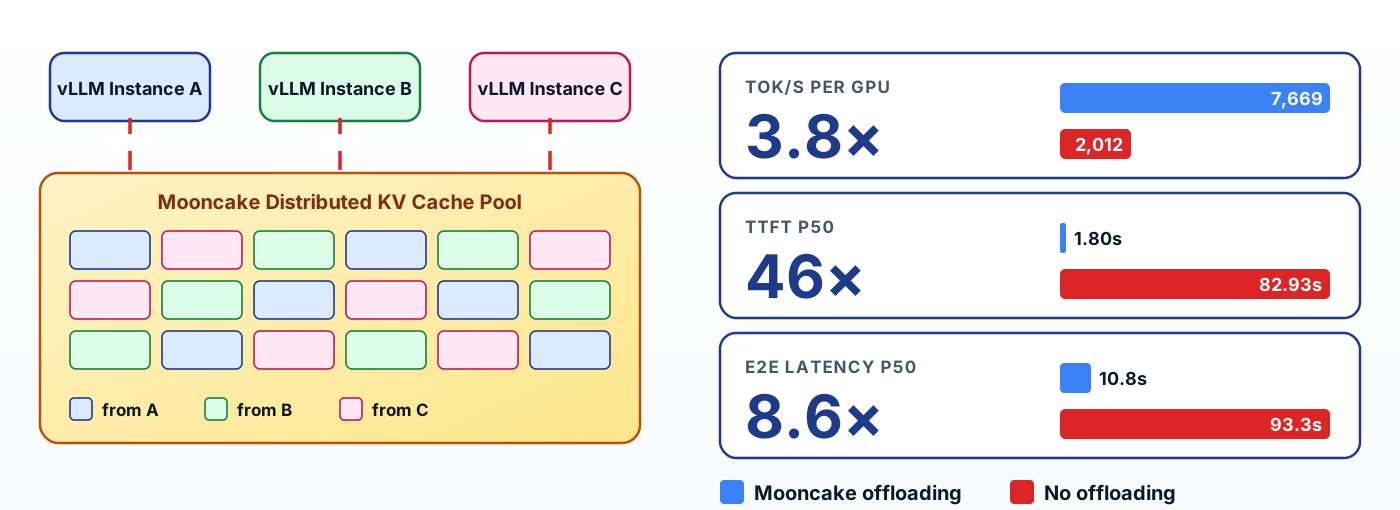
How vLLM integrates Mooncake Store as a distributed KV cache for agentic workloads, reusing shared prefixes across turns and instances to improve throughput, TTFT, end-to-end latency, and multi-GPU scaling.

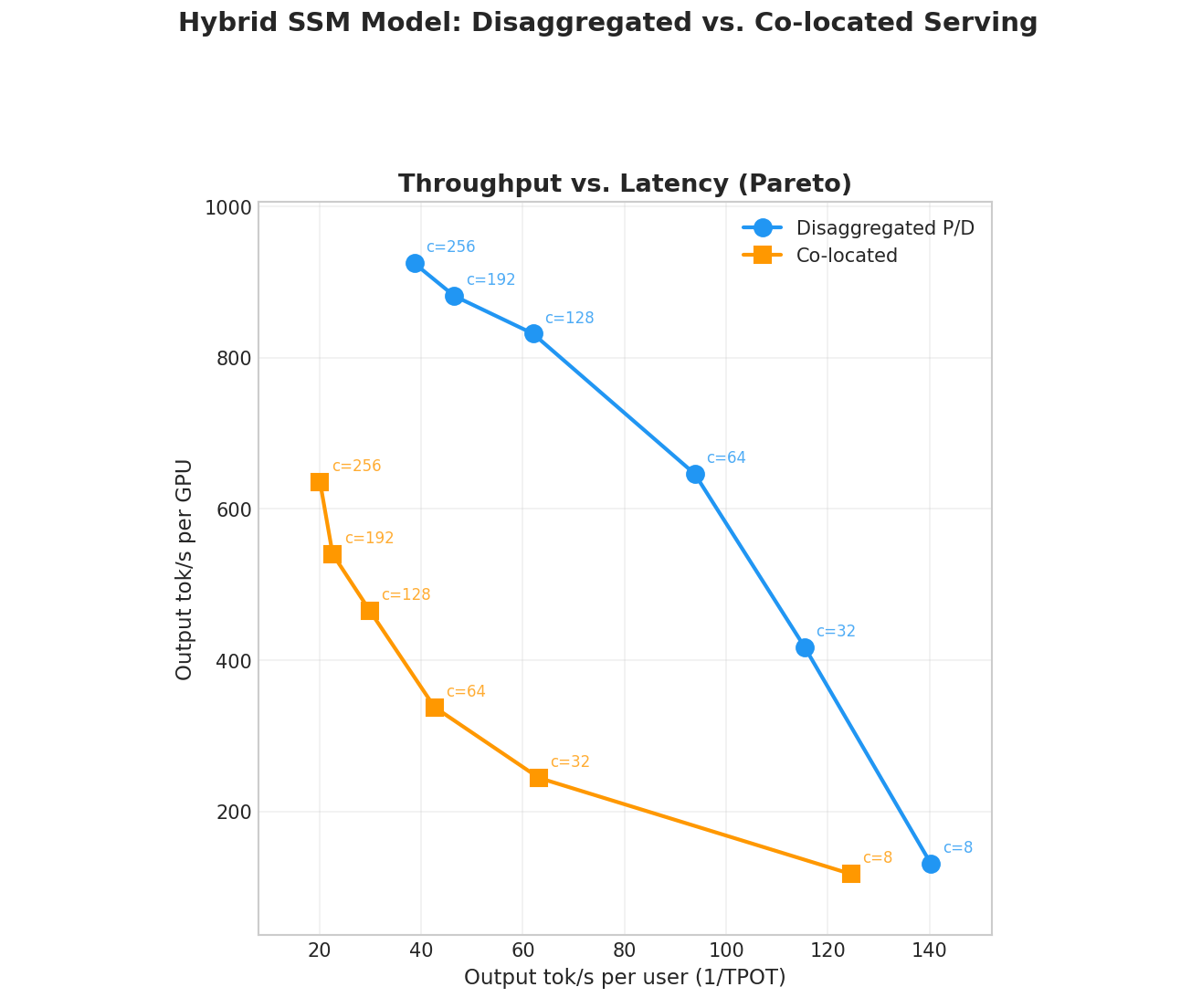
How vLLM extends NIXL prefill/decode disaggregation to hybrid SSM-attention models with dual descriptor views, physical-logical block bridging, and Mamba conv-state transfer support.
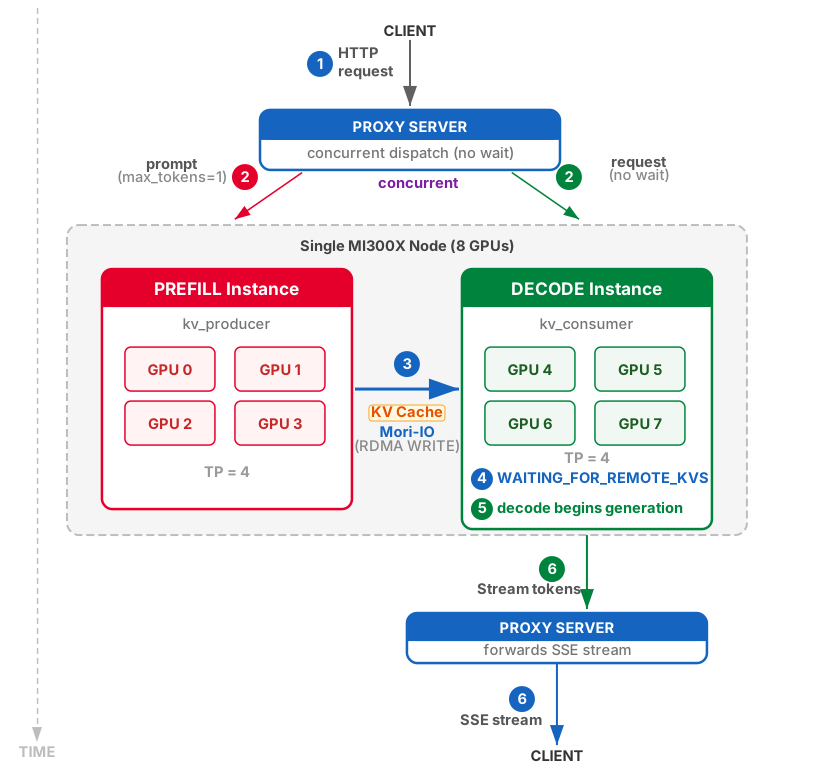
How single-node prefill/decode disaggregation in vLLM uses AMD MORI-IO on an 8-GPU MI300X node to separate prefill and decode, transfer KV cache efficiently, stabilize ITL, and improve goodput.